General-purpose material selection

ISO.

50 +

50 +

10 K+
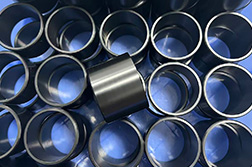
Custom non-metallic bushing services
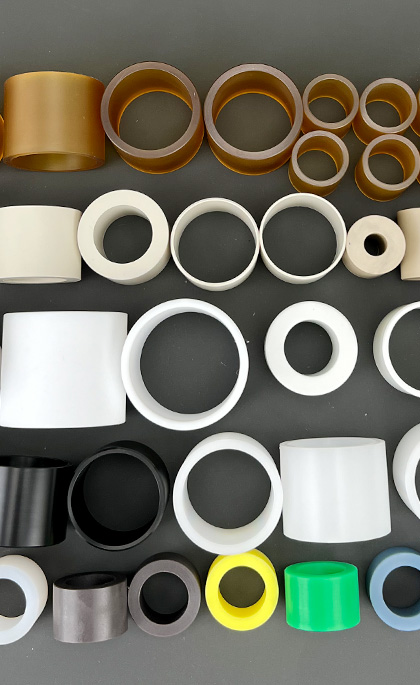
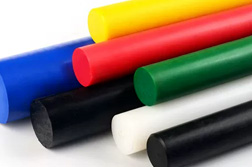
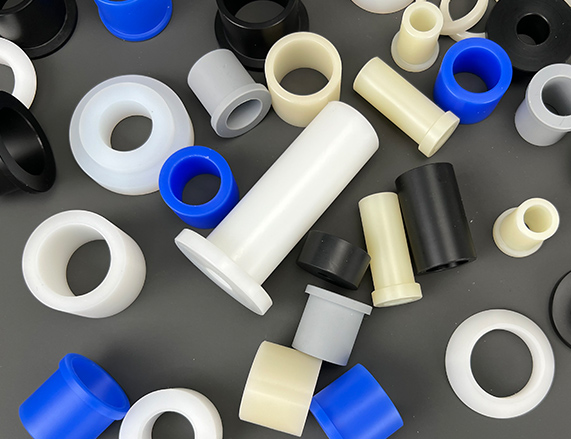
For HONGFS, the core of engineering plastic bushing selection lies in balancing load-bearing capacity, temperature resistance, friction and wear performance, and cost.
General-purpose light-to-medium load, cost-sensitive applications: POM / PA / PE
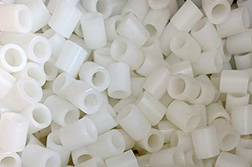
This is the most economical solution. POM offers good rigidity, fatigue resistance, and decent self-lubricating properties, with better dimensional stability than PA. It is well suited for bushings in automotive door locks, small gears, and similar applications. PA (Nylon) provides good toughness and impact resistance, but its moisture absorption can cause dimensional changes – caution is required in precision-fit applications. For light-to-medium loads at moderate temperatures (POM: approximately 80–100°C long-term; PA: approximately 80–120°C), these two materials are more than sufficient.
Medium load, maintenance-free, with moderate temperature requirements: PTFE
When you want to eliminate lubricating oil while carrying higher loads than plain plastics can handle, PTFE-based composites are a common choice. For example, glass-fiber-reinforced PTFE/PA bushings offer a permissible dynamic load of approximately 40 N/mm², sliding speeds up to 1.0 m/s, a friction coefficient of 0.06–0.15, and an operating temperature range of -180°C to +250°C. They are well suited for heavy-load, low-speed, maintenance-free applications such as construction machinery and agricultural equipment.
High-temperature or harsh chemical environments: PEEK, PPS, or PI
When temperatures exceed 150°C or chemical corrosion is present, specialty engineering plastics are required. PEEK offers excellent heat resistance and wear resistance, and its use in automotive components is increasing. PPS has the highest Young's modulus among resins and good chemical resistance, but it is relatively brittle and has poor impact resistance. PI (polyimide) is used in extreme applications such as aircraft engines, but its cost is extremely high and its processing is complex.
Why Our CNC Milling?
CNC Milling Process
1. CAD/CAM Programming
Our engineers create toolpaths optimized for your part geometry, minimizing cycle time while maintaining precision.
2. Material Setup
Raw stock is secured on the machine bed. Fixtures and workholding are customized for each part.
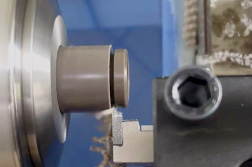
3. CNC Machining
Multi-axis machining with real-time tool monitoring. Cutting parameters are optimized for your material.
4. QC & Delivery
CMM inspection verifies all critical dimensions. Parts are cleaned, deburred, and packaged for shipment.